- 📍 Location: India, USA
- 🏭 Industry: Information Technology Services
- 💼 Domain: IT Service Management (ITSM)
The Challenge
A growing IT services company was struggling with increasing support requests, delayed ticket resolution, and inefficient manual processes. The organization was managing incidents and employee support requests through emails, spreadsheets, and disconnected tools, which created major operational bottlenecks.
Key Challenges:
- Delayed incident response times
- No centralized ticket tracking system
- Manual ticket assignment process
- Poor SLA visibility
- Repetitive Level-1 support workload
- Lack of reporting and operational insights
- Increased employee frustration due to slow resolutions
As the organization scaled, the existing process became difficult to manage and negatively impacted both operational efficiency and employee experience.
The Solution
To address the growing inefficiencies in IT support operations, we designed and implemented a comprehensive ServiceNow ITSM transformation strategy, not just a tool implementation, but a complete workflow redesign.
Our approach focused on:
- Standardization
- Automation
- Visibility
- Scalability
Step 1: Process Assessment & Workflow Redesign
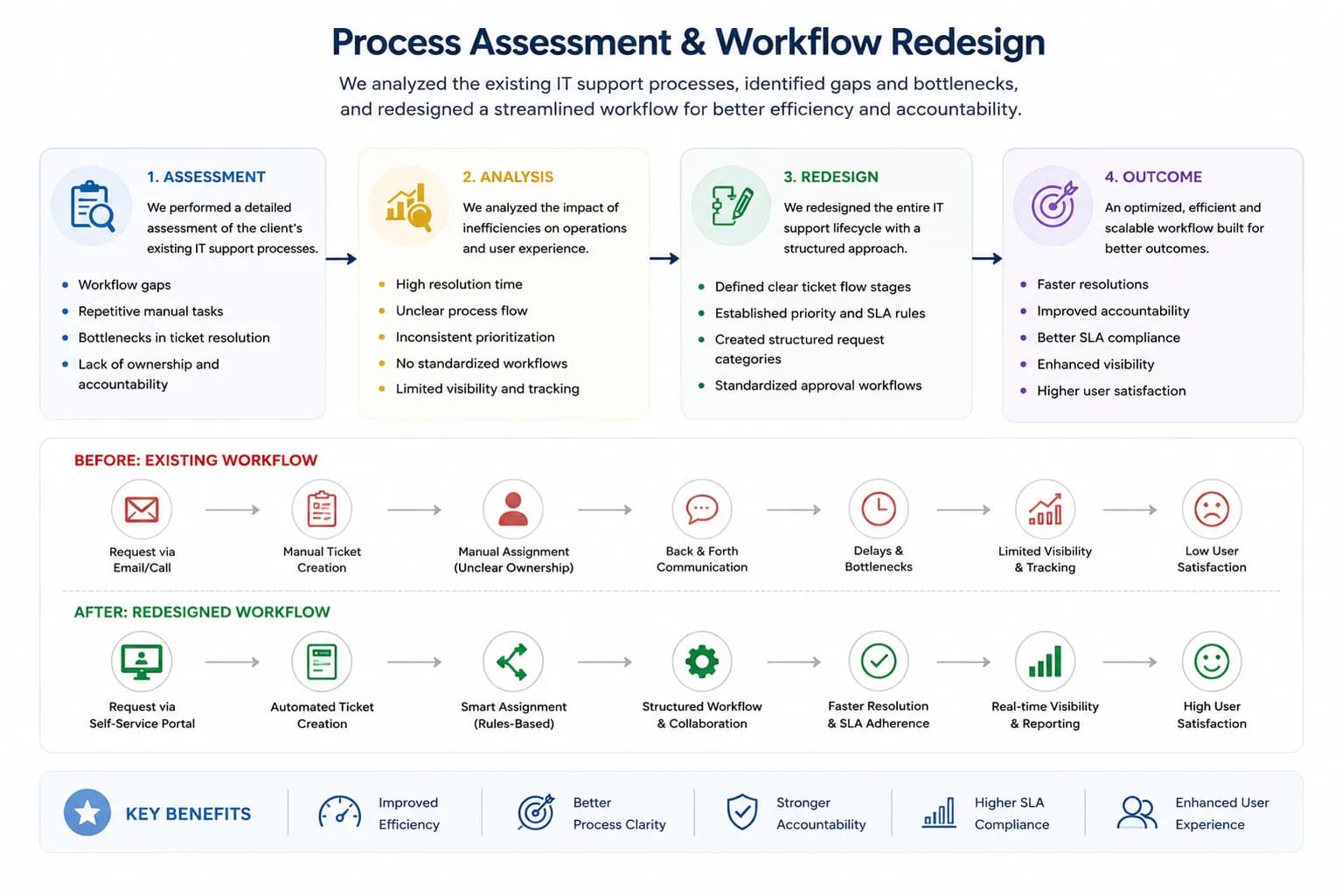
Before implementing ServiceNow, we performed a detailed analysis of the client’s existing IT support processes.
Identified Issues:
- Workflow gaps
- Repetitive manual tasks
- Bottlenecks in ticket resolution
- Lack of ownership and accountability
Actions Taken:
- Defined clear ticket flow stages
- Established priority and SLA rules
- Created structured request categories
- Standardized approval workflows
This ensured that the system was built on optimized processes, not broken ones.
Step 2: Centralized Ticketing System Implementation
We implemented a unified ServiceNow ITSM platform to centralize all IT requests.
Key Improvements:
- All incidents and service requests routed through a single platform
- Elimination of email-based and manual tracking
- Real-time ticket visibility for all stakeholders
- Structured categorization of issues
This created a single source of truth for all IT operations.
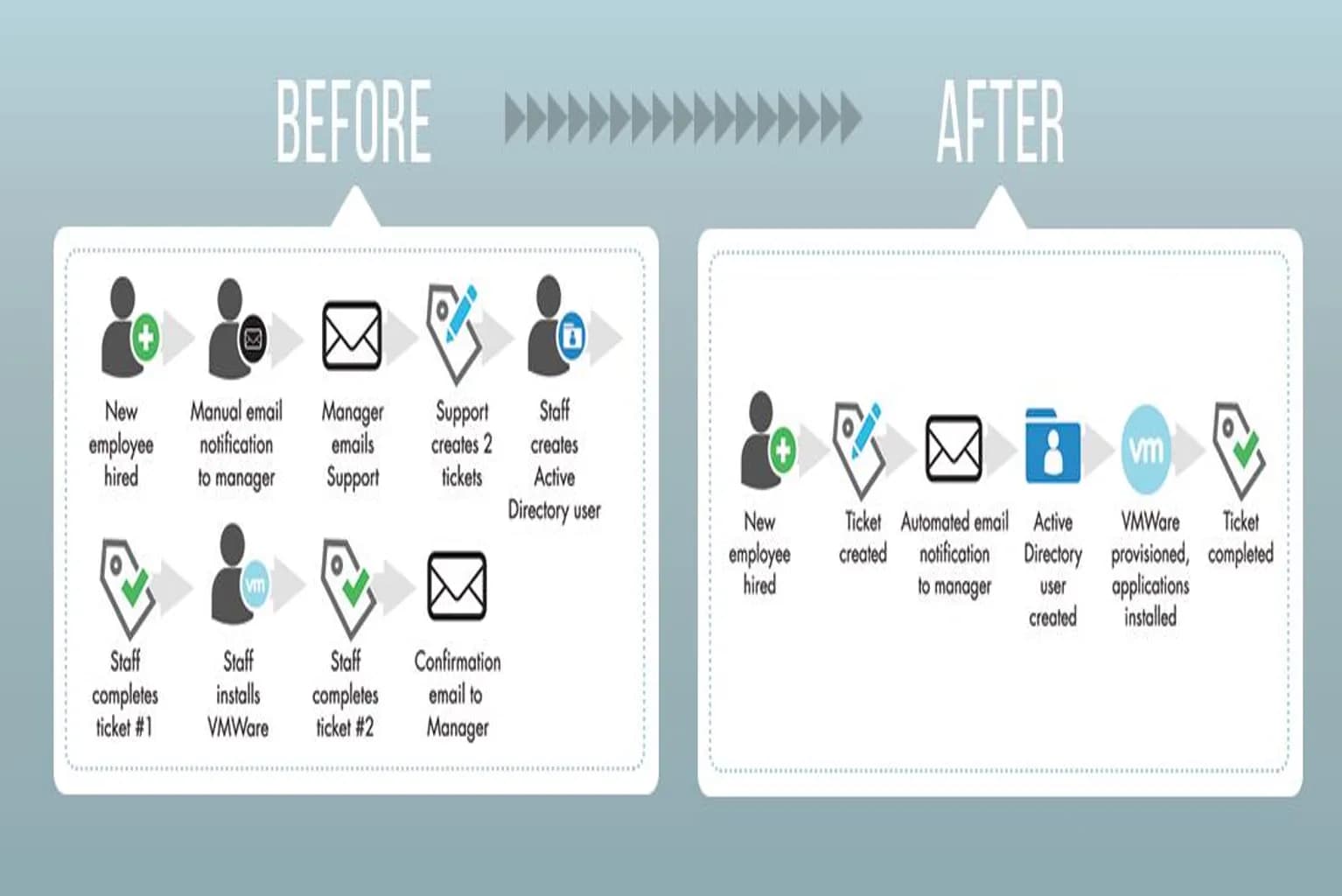
Step 3: Intelligent Automation & Workflow Engine
To reduce manual effort, we configured automation-driven workflows:
- Auto-ticket creation from user inputs
- Priority-based routing using predefined rules
- Automated escalation for SLA breaches
- Status-based workflow transitions
- Notifications and alerts for stakeholders
This minimized human dependency and improved response speed.
Step 4: Self-Service & Knowledge Management
We introduced a self-service portal integrated with a knowledge base, allowing employees to resolve common issues independently.
Features:
- Predefined service catalog
- Knowledge articles for frequent issues
- Guided request submission forms
- Automated request tracking
This reduced unnecessary ticket volume and improved user experience.
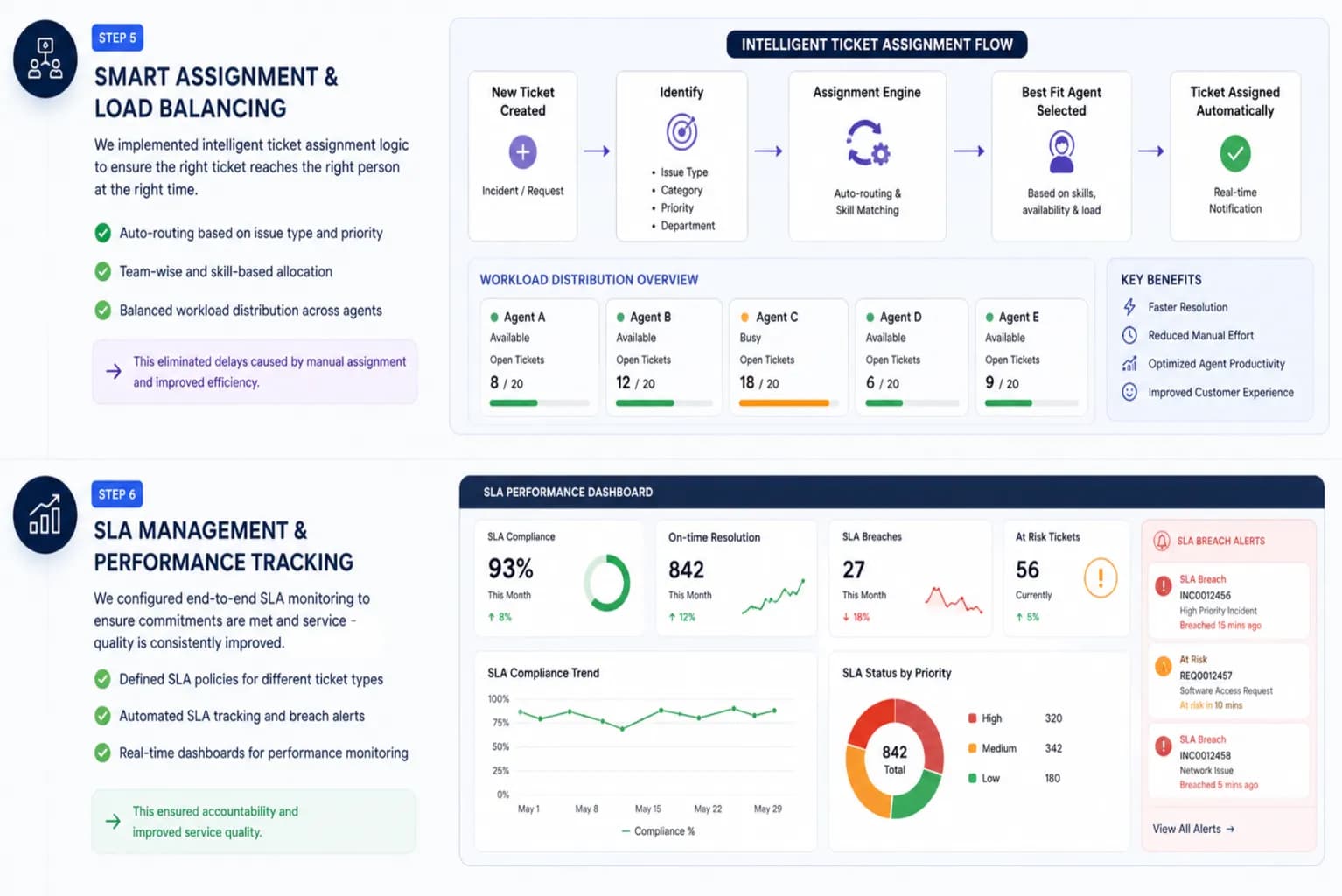
Step 5: Smart Assignment & Load Balancing
We implemented intelligent ticket assignment logic:
- Auto-routing based on issue type and priority
- Team-wise and skill-based allocation
- Balanced workload distribution across agents
This eliminated delays caused by manual assignment and improved efficiency.
Step 6: SLA Management & Performance Tracking
We configured end-to-end SLA monitoring:
- Defined SLA policies for different ticket types
- Automated SLA tracking and breach alerts
- Real-time dashboards for performance monitoring
This ensured accountability and improved service quality.
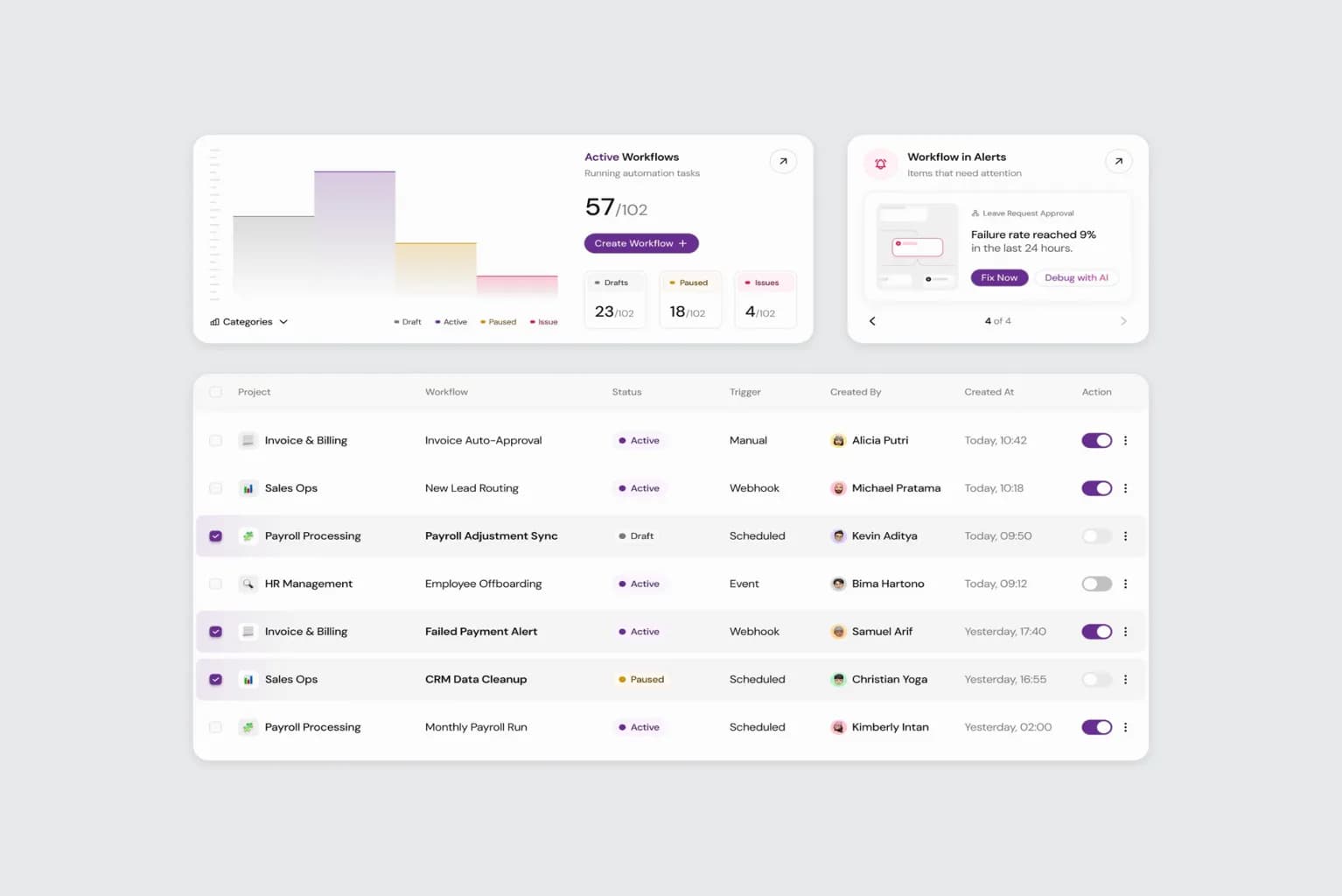
Step 7: Reporting & Operational Visibility
Custom dashboards and reports were built to provide:
- Ticket volume insights
- Resolution performance metrics
- SLA compliance tracking
- Team productivity analysis
This enabled leadership to make data-driven decisions.
Step 8: Scalability & Future-Ready Architecture
The solution was designed to scale with the organization:
- Modular workflow design
- Easy integration with future systems
- Expandable service catalog
- Support for additional ServiceNow modules
This ensured long-term sustainability of the system.
Core Implementations
Incident Management Automation
- Automated ticket creation
- Priority-based ticket routing
- SLA tracking
- Escalation workflows
- Real-time status updates
Self-Service Employee Portal
- Raise incidents
- Track requests
- Access knowledge articles
- Resolve common issues independently
Smart Ticket Assignment
- Issue category-based routing
- Priority-based assignment
- Department-wise allocation
- Rule-based automation
Business Impact
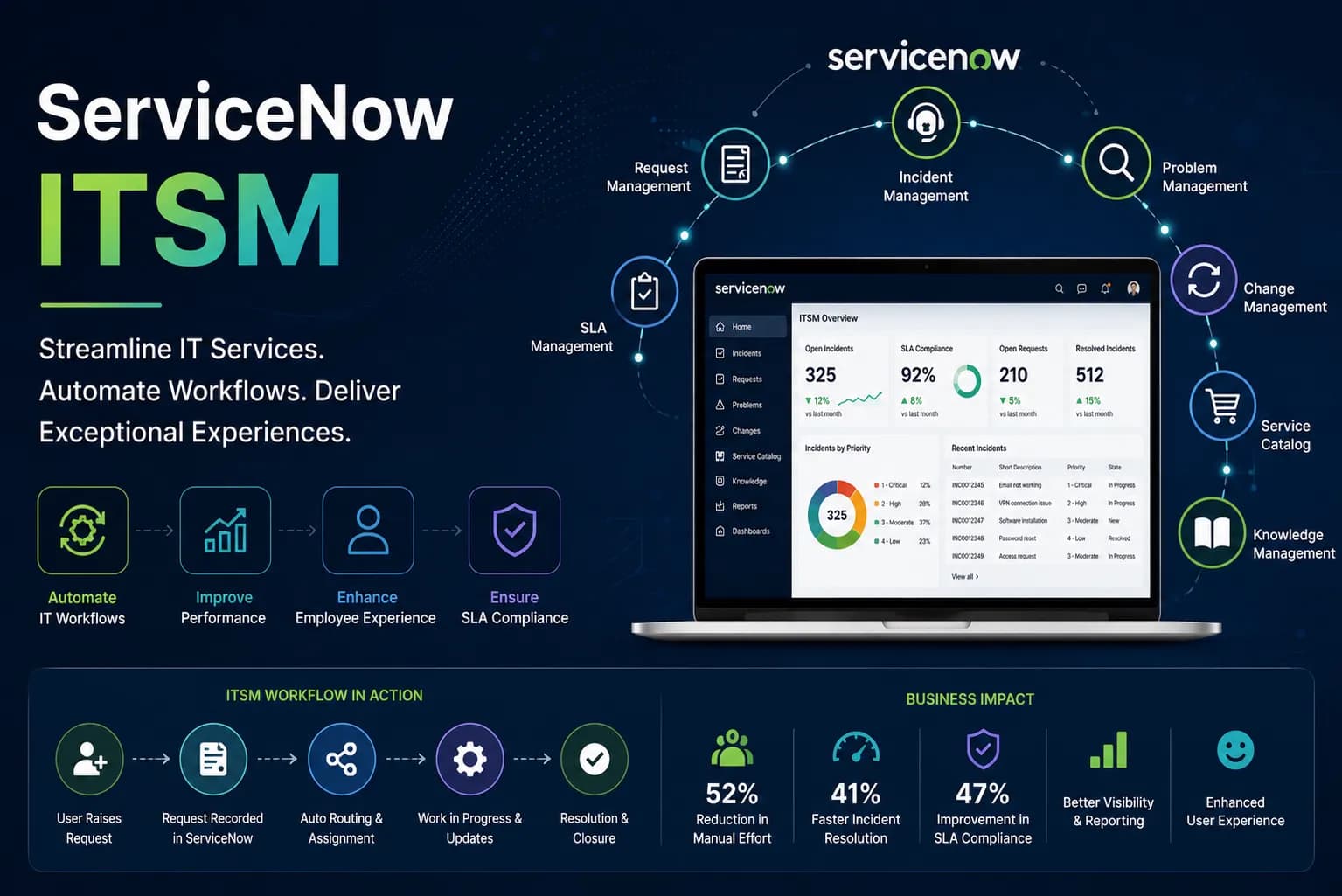
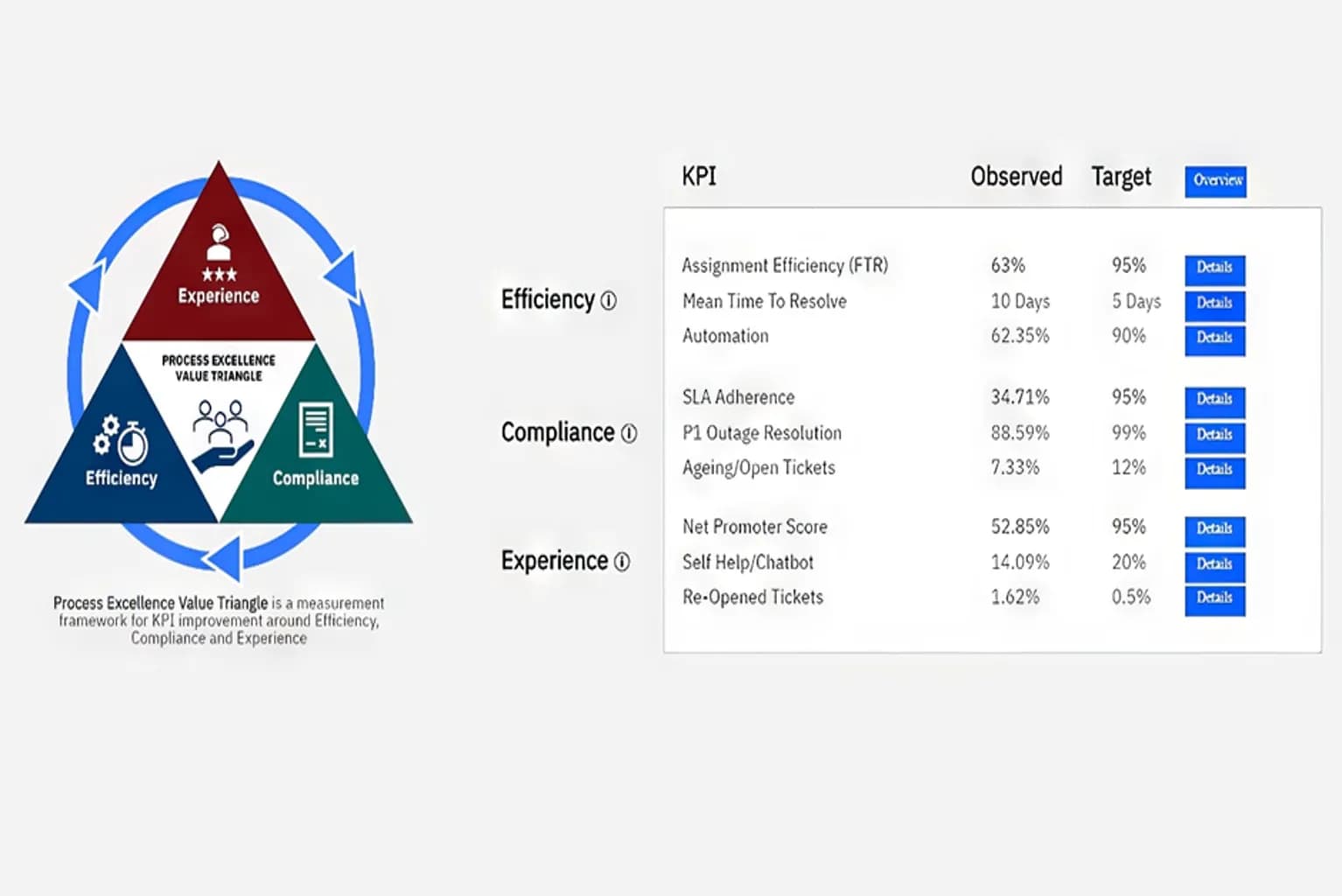
After implementing the ServiceNow ITSM solution, the organization achieved significant operational improvements.
Measurable Outcomes:
- 52% reduction in manual ticket handling
- 41% faster incident resolution time
- 47% improvement in SLA compliance
- Reduced repetitive Level-1 support workload
- Improved visibility into IT operations
- Enhanced employee support experience
- Centralized reporting and dashboards
Technologies Used
Platform
- ServiceNow ITSM
Modules
- Incident Management
- Service Catalog
- SLA Management
- Knowledge Management
Features
- Workflow Automation
- Assignment Rules
- Self-Service Portal
- Reporting & Dashboards
Client Feedback
“The ServiceNow implementation transformed the way our IT support team operates. Automated workflows and centralized visibility significantly improved our response times and internal efficiency.”
, IT Operations Manager, Credit-Cloud
Delivered from our Jaipur hub. Read about our ServiceNow ITSM implementation service, how we operate as a Salesforce company in India, and our Jaipur office.