Integrating Amplemarket with Salesforce enables sales teams to streamline their prospecting and outreach workflows by automatically syncing leads, contacts, and activities between both platforms. It brings together the best of sales prospecting and CRM management.
Amplemarket’s AI-driven lead generation and outreach capabilities feed directly into Salesforce, ensuring every qualified lead and interaction is automatically logged. This eliminates manual data entry, keeps the CRM updated in real-time, and provides sales managers with accurate insights for forecasting. Teams can use Amplemarket’s data enrichment to enhance Salesforce records, while automated workflows in Salesforce help convert these enriched leads into opportunities efficiently.
Sales teams today need tools that work together seamlessly. Amplemarket is a sales engagement platform that helps with prospecting, outreach, and tracking communications. Salesforce is a CRM (Customer Relationship Management) system that stores all customer and lead information.
This guide will explain:
- What is the Amplemarket and Salesforce Integration?
- Why Use the Integration?
- Prerequisites
- Step-by-Step Setup
- Automating Lead Sync from Amplemarket to Salesforce
- Testing the Integration
What is the Amplemarket and Salesforce Integration?
The integration allows Amplemarket to send and receive data directly from Salesforce. For example: When you create or update a lead in Amplemarket, it can appear in Salesforce instantly. If you send an email campaign from Amplemarket, the activity can be logged in Salesforce. You can use Salesforce data to personalize outreach sequences in Amplemarket. This helps sales reps save time, ensures that the CRM stays up to date, and provides managers with accurate reporting.
Why Use the Integration?
Here’s how this integration benefits your team: No Manual Data Entry, Reduces duplicate work. Better Reporting, Sales managers can track outreach performance directly in Salesforce. Faster Lead Follow-up, Leads move through the funnel more smoothly. Improved Personalization, Amplemarket uses Salesforce data to personalize messages.
Prerequisites
Before initiating the integration between Amplemarket and Salesforce, it is essential to ensure that the Salesforce user account used for the connection has the necessary object-level and administrative permissions. These permissions are required to allow Amplemarket to read, create, and update records in Salesforce, as well as to ensure seamless data synchronization and reporting.
Read/Created/Edit on the Standard Objects:
- Accounts
- Contacts
- Leads
- Tasks
- Opportunities
Required Administrative Permissions:
- API Enabled
- View Setup and Configuration
- Run Reports
- View Reports in Public Folders
- Edit Tasks
Add "Amplemarket" value to the LeadSource
- Go to setup → Object Manager → Lead → Fields & Relationships
- Click on the "LeadSouce" field
- Add Amplemarket as the new picklist value.
- Click on the Save button.
Step-by-Step Setup
Connecting Salesforce
- Log in to your Amplemarket dashboard.
- Go to Settings → Integrations → Salesforce.
- Click on Connect Salesforce.
- You’ll be redirected to a Salesforce login screen.
- Log in as an Admin and allow access for Amplemarket to connect.
Configuring Push Records Setting for Leads
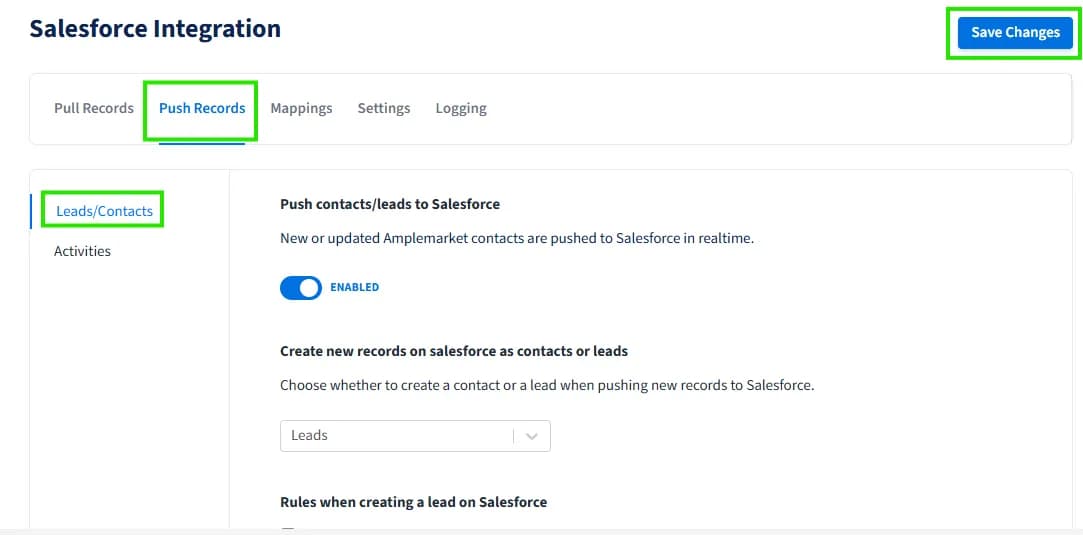
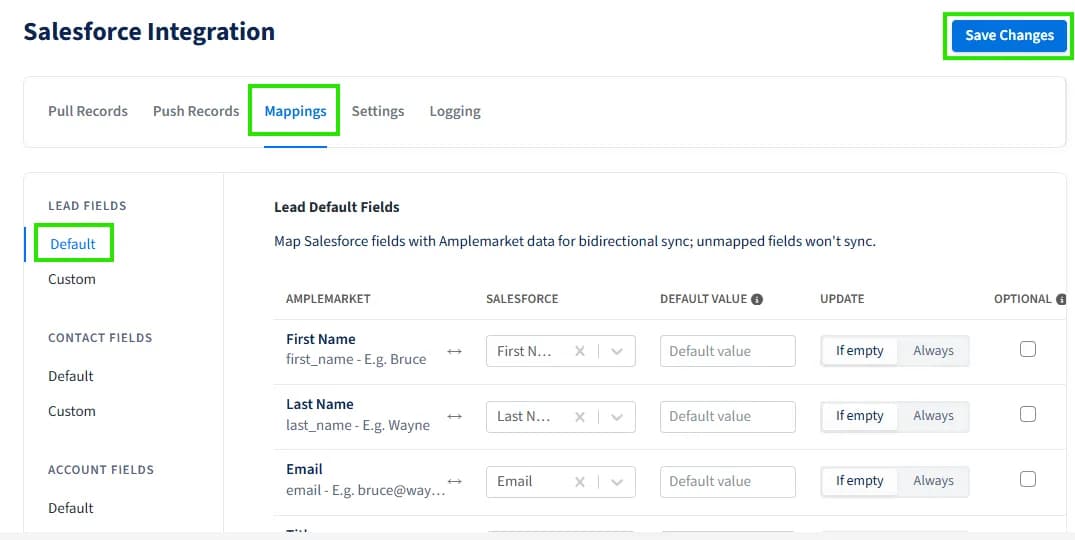
To decide how Amplemarket sends data to Salesforce, you need to configure the Push Records settings. Here are the steps to follow:
- Turn on the toggle under the Push Records tab to allow Amplemarket to send data to Salesforce. Decide if you want new records to be created as Contacts or Leads in Salesforce (Lead in this case).
- Decide Which Records to Push:
- You can push all contacts enrolled in Amplemarket sequences, or
- Push only those who reply with specific labels (e.g., positive response).